홈 / 책 찾기 / Neutrosophy in Arabic philosophy
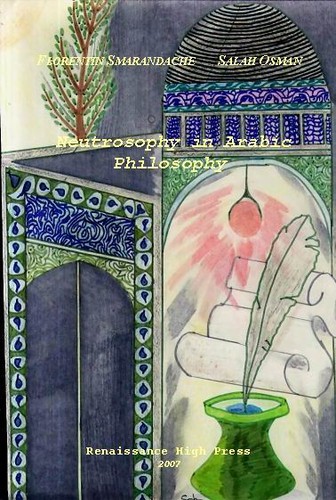
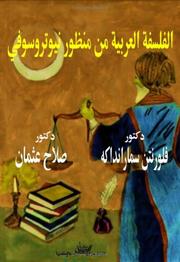
Neutrosophy in Arabic philosophy
Neutrosophy is a theory developed in 1995 by Florentin Smarandache as a generalization of dialectic. This theory considers every notion or idea <A> together with its opposite or negation <antiA> and the spectrum of "neutralities" <neutA> (i.e. notions or ideas located between the two extremes, supporting neither <A> nor <antiA>). The <neutA> and <antiA> ideas together are referred to as <nonA>. In this theory every idea <A> tends to be neutralized and balanced by <antiA> and <nonA> ideas - as a state of equilibrium. Hence, neutrosophy is based not only on analysis of oppositional propositions as dialectic does, but on analysis of these together with neutralities in between them as well. Neutrosophy was extended to Neutrosophic Logic, Neutrosophic Set, Neutrosophic Probability and Neutrosophic Statistics, which are used in technical applications. In the neutrosophic logic every logical variable x is described by an ordered triple x = (T, I, F), where T is the degree of truth, F is the degree of false, and I the degree of indeterminacy, with T, I, F subsets of the non-standard unit interval ]-0, 1+[. In addition, these values may vary over time, space, hidden parameters, etc. Examples of Neutrosophy used in Arabic philosophy: - While Avicenna promotes the idea that the world is contingent if it is necessitated by its causes, Averroes rejects it, and both of them are right from their point of view. Hence <A> and <antiA> have common parts. - Islamic dialectical theology (kalam) promoting creationism was connected by Avicenna in an extraordinary way with the opposite Aristotelian-Neoplatonic tradition. Actually a lot of work by Avicenna falls into the frame of neutrosophy. - Averroes's religious judges (qadis) can be connected with atheists' believes. - al-Farabi's metaphysics and general theory of emanation vs. al-Ghazali's Sufi writings and mystical treatises [we may think about a coherence of al-Ghazali's "Incoherence of the Incoherence" book]. - al-Kindi's combination of Koranic doctrines with Greek philosophy. - Islamic Neoplatonism + Western Neoplatonism. - Ibn – Khaldun’s statements in his theory on the cyclic sequence of civilizations, says that: Luxury leads to the raising of civilization (because the people seek for comforts of life) but also Luxury leads to the decay of civilization (because its correlation with the corruption of ethics). - On the other hand, there’s the method of absent–by–present syllogism in jurisprudence, in which we find the same principles and laws of neutrosophy. - In fact, we can also function a lot of Arabic aphorisms, maxims, Koranic miracles (Ayat Al-Qur’ãn) and Sunna of the prophet, to support the theory of neutrosophy. Take the colloquial proverb that "The continuance of state is impossible" too, or "Everything, if it’s increased over its extreme, it will turn over to its opposite"!
| 제목 | Neutrosophy in Arabic philosophy |
|---|---|
| 저자 | Florentin Smarandache |
| 출판사 | Renaissance High Press |
| 출간 | 2007 |
| 쪽수 | 278쪽 |
| 언어 | 영어 |
| ISBN | 9781931233132 |
배송
결제가 확인되면 해외 판매처에 주문을 넣습니다. 받으시기까지 보통 2~3주 걸립니다. 국내에 들어오면 택배 송장번호를 주문 화면과 문자로 알려 드립니다.
통관
개인 주문은 개인통관고유부호가 필요합니다. 주문서에 넣어 주시고, 받은 번호는 그 주문에만 씁니다.
취소, 반품
해외 주문 전에는 주문 화면에서 바로 취소하실 수 있고 전액 환불됩니다. 해외 주문 뒤에는 단순 변심 취소가 어렵습니다. 받으신 책이 설명과 크게 다르거나 파손되었으면 다시 구해 드리거나 환불합니다.